Live
-
{{ is_pkg(link.U) }}{{ link.T }} {{ get_host(link.U) }} - {{ link.N }} ( {{ get_host(link.U) }} )
{{ is_pkg(link.U) }}{{ link.T }} {{ get_host(link.U) }}( {{ get_host(link.U) }} )
{{ item.date }}
-
{{ is_pkg(link.U) }}{{ link.T }} {{ get_host(link.U) }} - {{ link.N }}
( {{ get_host(link.U) }} ){{ is_pkg(link.U) }}{{ link.T }} {{ get_host(link.U) }}
( {{ get_host(link.U) }} )
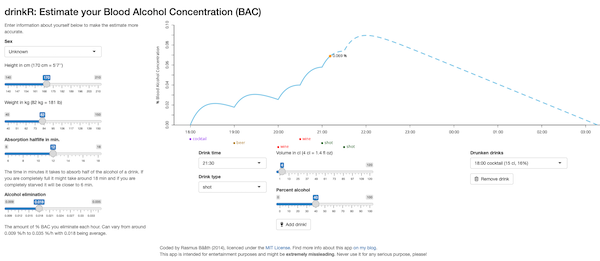
R Weekly 2026-W44 15 yrs of ROpenSci, BAC in the browser
This week’s release was curated by Jon Calder, with help from the R Weekly team members and contributors.
Highlight
Insights
R in the Real World
-
How many rules does it take to guess a German noun’s gender? - Use R, subtitle frequencies, and a compact decision tree to predict noun gender while keeping the model small enough to memorize.
R in Organizations
R in Academia
Tutorials
-
Dating hybrid populations with hybridclock: five worked datasets
-
What else looks like hybrid age? Linkage, inbreeding, drift, dropout, gene flow and selection
-
Forecasting genetic range shifts along migration corridors with corridoR
-
Using RustScenic from Seurat / R - Exchange sparse, log-normalized RNA with Python and return regulon activity by cell ID; tested with SeuratObject 5.4.0 on synthetic input.
New Packages
📦 Keep up to date wtih CRANberries 📦
CRAN
- {hybridclock} 0.1.1: Dates hybrid populations beyond F2, with or without a genetic map, with calibrated intervals.
- {corridoR} 0.2.0: Forecasts how gene flow among populations will shift along migration corridors under climate change.
- {whence} 0.1.0: Explain Where a Number Came from in ‘shiny’ Apps
- {SurveySolutionsAPIv2} 0.1.2: Comprehensive API Access to Your ‘Survey Solutions’ Server Using ‘httr2’
- {soilwatR} 0.1.1: Simulation of Soil Water Flow Based on Darcy’s Law
- {robotstxtr} 0.3.1: Engine-Aware ‘robots.txt’ Policy with Google’s Matcher Algorithm
- {p3d} 0.1.0: Interactive 3D Visualization of p-Value Surfaces
- {OptimalFactor} 1.5.0: Item Selection in Factor Analysis by Boosting and Specification Search
- {MAC.address} 0.1.0: Find, Validate and Identify Device MAC Addresses
- {ltvlms} 0.1.0: Linear Time-Variant Logistic Models with a Shape Parameter
- {cdiscdata} 0.2.0: Versioned CDISC Standards Reference Data
- {boltzrosen} 0.1.0: Boltzmann-Rosenbrock Distribution and Associated Copula
- {paretoinfer} 0.1.0: Sequential Identification of Approximately Pareto-Optimal Alternatives under Noise
- {DistLagHet} 0.1.0: Treatment Effect Estimation in Complex Designs
- {agriTradeRisk} 0.1.0: Agricultural Export Competitiveness and Risk Analysis
- {agriEquity} 0.1.0: Equity and Sustainability Assessment of Agricultural Subsidies
- {fpoValue} 0.1.0: Farmer Producer Organisation Economics and Member Benefit Accounting
- {controlledburn} 0.3.1: Sparse Geometry Rasterization with Exact Coverage Fractions
- {smak} 0.1.0: Scalable Model Averageing Kit
- {LMDT} 0.1.0: Local Manifold Dispersion Test for Heteroskedasticity
- {LAGOtrials} 1.1.0: Learn-as-You-Go Adaptive Trial Optimization
- {DoExp} 0.1.0: Design of Experiments with Hasse Diagrams and Anatomy Tables
- {tidyfault} 0.1.0: Tidy Fault Tree Analysis
- {RQK} 1.0.0: Rational Quadratic Kriging
- {RCPA4} 1.0.0: Data and Functions for “An R Companion to Political Analysis, Fourth Edition”
- {PheValuator} 2.2.18: Rapid Phenotype Evaluation
- {flexsdm} 1.4.2: Flexible Species Distribution Modeling Workflow
- {esgcalc} 0.2.0: Offline Environmental, Social and Governance Calculations
- {coiR} 0.1.0: Analysis of Canopy Openness Index from Fisheye Images
- {AdaptiveGlasso} 1.0.0: Adaptive Graphical Lasso for Sparse Network Estimation
- {zucrypt} 0.1.0: Cryptography Without System Dependencies
- {umg} 0.6.1: Unified Model Graphs for Statistical Models in Psychology
- {twoPhaseSens} 0.1.0: Sensitivity Analysis for Covariates Observed in Two-Phase Samples
- {SNPAssayR} 1.0.1: SNP Genotyping Assay Design and Visualization
- {RDML7} 1.0.2: Read, Write, Validate, and Analyze Real-Time PCR Data in the ‘RDML’ Format
- {prime} 0.5.5: Proportional Inclusive Marginal Effects
- {NormGen} 0.0.6: An Efficient and Precise Quantile Mapping for Normal Pseudo-Random Number Generation
- {MultipleSystemsEstimation} 1.3.2: Methods for Multiple Systems Estimation
- {fereg} 0.4.0: Fast Fixed-Effects Estimation with the ‘fixest’ Interface
- {EnvRtype} 0.1.3: Envirotyping for Quantitative Genetics and Plant Breeding
- {CoxRMSTSimpson} 0.1.0: Restricted Mean Survival Time from Cox Models
- {camplet} 1.0.0: Seasonal Adjustment via the CAMPLET Method
- {AccumulatR} 1.0.0: Simulation and Likelihood Tools for Evidence-Accumulation Models Models
- {zufft} 0.1.0: Fast Fourier, Cosine and Sine Transforms
- {zuexact} 0.1.0: Exactly Rounded Sums, Means and Dot Products Provincias, Cantones y Parroquias del Ecuador)
- {Applr} 1.0.0: Visualize and Explain Linear Models
- {spifa} 0.1.0: Bayesian Spatial Item Factor Analysis
- {progme} 0.1.0: Extended Progression Models for Repeated Measures
- {nrMCmix} 0.3: Non-Reversible Markov Chains for Bayesian Mixture Models
- {fkr} 0.1.0: Realistic Fake Data Generator for the Philippines
- {rjd3bridge} 0.1.0: Bridge Between ‘RJDemetra’ (V2) and ‘rjd3’ (V3)
- {fieldopt} 0.1.0: Area-Frame and Dual-Frame Survey Design under Real Field Cost
- {tsexplorer} 0.1.0: Exploratory and Diagnostic Tools for Time Series and Forecasts
- {survHC} 0.1.0: Higher Criticism Tests for Non-Proportional Hazard Deviations
- {publishTC} 0.2.3: Tools to Help to Publish the Trend-Cycle Component
- {powerutilities} 0.7.1: Power Analysis for Linear and Generalized Linear Mixed Models
- {DetectOutlier} 0.1.1: Detect Outliers in Data Frames and Export Results
- {convertxlsform} 0.3.0: Convert an ‘XLSForm’ to a ‘Word’ or PDF Document
- {zinbcdpmm} 0.1.0: Bayesian ZINB-Ordinal Joint Model with CDPMM Random Effects
- {rjd3highfreq} 3.0.1: Seasonal Adjustment of High Frequency Data with ‘JDemetra+ 3.x’
- {openstudyval} 0.1.1: Open Validator for FDA Study-Data Submissions
- {geopt} 0.1.0: Tools to Access and Map Spatial Datasets of Portugal
- {exactcond} 0.2.0: Exact Conditional Reference Distributions for Tables and Selected Linear Models
- {anotherSAS7bdat} 0.0.7: Read ‘SAS’ Data in Chunks and Convert to ‘Parquet’
- {taruwind} 0.1.1: Reduced-Mode Terrain and Surface Wind Downscaling
- {ssurvdr} 0.1.0: Sparse Survival Dimension Reduction for High-Dimensional Censored Data
- {metrictrails} 1.0.0: Processing of GNSS Streams from Sports Watches
- {l1penSVMs} 0.1.0: Regularization Paths of L1-Penalized SVMs
- {kbaabb} 0.0.1: Generates an Artificial Population Based on the KBAABB Methodology
- {geopytorch} 0.1.0: R Interface to ‘GeoPyTorch’
- {flexMatch} 0.1.0: Flexible Matching for Stacked Difference-in-Differences
- {ET0RadModels} 1.0.0: Evapotranspiration Estimation Using Radiation-Based Models
- {ET0MassModels} 1.0.0: Evapotranspiration Estimation Using Mass Transfer-Based Models
- {cndplantanalysis} 1.0.2: Compositional Nutrient Diagnosis for Plant Tissue Analysis
- {cdtr} 0.1.0: Constrained Delaunay Triangulation with Refinement
- {b3gbi} 1.1.3: General Biodiversity Indicators for Biodiversity Data Cubes
- {zufast} 0.1.0: Fast Portable ‘C’ Primitives for Parsing and Formatting Data
- {zucbor} 0.1.0: Deterministic and Secure CBOR Encoding and Decoding
- {VasGBIF} 3.7.1: Fast and Easy Compilation of Vascular Plants Occurrence Records from ‘GBIF’
- {TSGenerator} 2.0.1: ‘Copernicus’ HR-VPP Vegetation Time-Series Processing
- {sundials} 7.9.0-1: Vendored ‘SUNDIALS’ Solver Suite for Linking by Other Packages
- {sbert} 0.5.8: Topic Modeling with ‘Sentence-BERT’ Embeddings
- {reconf} 0.2.0: Confidence Intervals for Random Effect Parameters in Linear Mixed Models
- {oddsrelay} 0.1.0: Client for the ‘OddsRelay’ Sports Odds API
- {LatencyA} 1.0.2: Latency Analysis in Epidemiological Studies Using Weighted Cumulative Exposures
- {ggfourfold} 0.1.0: Fourfold Displays for ‘ggplot2’
- {gaussianprocesses} 1.0.0: Gaussian Processes from First Principles
- {FuzzyRandom} 0.1.0: Level-Wise Statistics for Fuzzy Random Variables
- {feols.asv} 0.0-1: Average Shared Variance (ASV) Decomposition for Multiple Fixed-Effects Models
- {cldreducer} 0.2.0: Reduce Compact Letter Displays
- {boundedHill} 0.1.0: Bayesian Logistic Regression with Lower and Upper Asymptotes
- {aquats} 1.2.2: Robust Ecological and Fisheries Data Analysis and Visualization
- {adlaplace} 0.7.4: Laplace Approximations Using Automatic Differentiation
- {webformscore} 2.2.0: ‘WebForms Core’
- {posc} 0.2.0: Probability of Outcome Superiority Curves
- {oes} 1.0.0: Optimal Effect-Size-Based Y-Axis Ranges
- {metamixr} 0.1.0: Bayesian Meta-Analytic Mixture Modelling
- {hsquared} 0.9.0: ‘R’ Interface for ‘Julia’-Backed Quantitative-Genetic Models
- {edetect} 0.1.0: Anytime-Valid Control Charts with E-Detectors
- {dtptite} 0.1.0: Dose Transition Pathways for Time-to-Event Dose-Finding Designs
- {termr} 1.0.1: Modern Reactive Terminal Applications with Data Workflows
- {soilcnn} 0.1.0: Convolutional Neural Networks for Digital Soil Mapping
- {rTARDIS} 2.1.2: Terrains and Routes Directed in Spacetime
- {BvCh} 0.1.0: Bivariate Chen Distribution: Density, Survival, Hazard, Plots and Estimates
- {BiasedMatch} 0.1.0: Biased Matching for Two-Urn Sampling Problems
- {IFFuzzyStats} 0.1.0: Intuitionistic Fuzzy Statistics
- {tampaBayOpenData} 0.1.0: An R Interface to Tampa Bay Public Open Data Analysis of First-Price Auctions
- {palettome} 1.0.1: Hierarchy-Aware, Interactively Editable Color Palettes for Clusters
- {genevintage} 0.1.3: Detect Annotation Releases and Repair Gene Names
- {ERA5Flux} 1.0.0: Improve the Utility of ERA5-Land Data at AmeriFlux Site Locations
- {zstd} 0.1.0: Zstandard Compression
- {learnr2} 0.1.3: Interactive Tutorials with ‘Quarto’ and ‘WebR’
- {lassoinf} 0.1.0: Selective Inference for the Randomized Lasso
- {hpsreg} 1.0.0: Regression for Hierarchically Ordered Clinical Outcomes via Pairwise Comparisons (Bradley-Terry-Davidson Model)
- {climabr} 0.1.0: Interface for Accessing Weather Data from Climatempo
- {spectra2rgb} 0.1.0: Convert Spectral Signatures to sRGB and CIELAB Colour Coordinates
- {solvency2} 0.5.1: Offline Solvency II Calculations and Regulatory Parameters
- {DistributionalDDA} 0.1.1: Distributional Data Analysis in Bayes Spaces
- {hestia} 0.1.0: Bayesian Compartmental Infection Models from Individual Outcomes
- {ggmGraphEditor} 0.1.0: Interactive Graph Layout Editor for Mixed Graphs
- {regsensitivity} 0.2.0: Regression Sensitivity Analysis for Omitted Variable Bias
GitHub or Bitbucket or GitLab
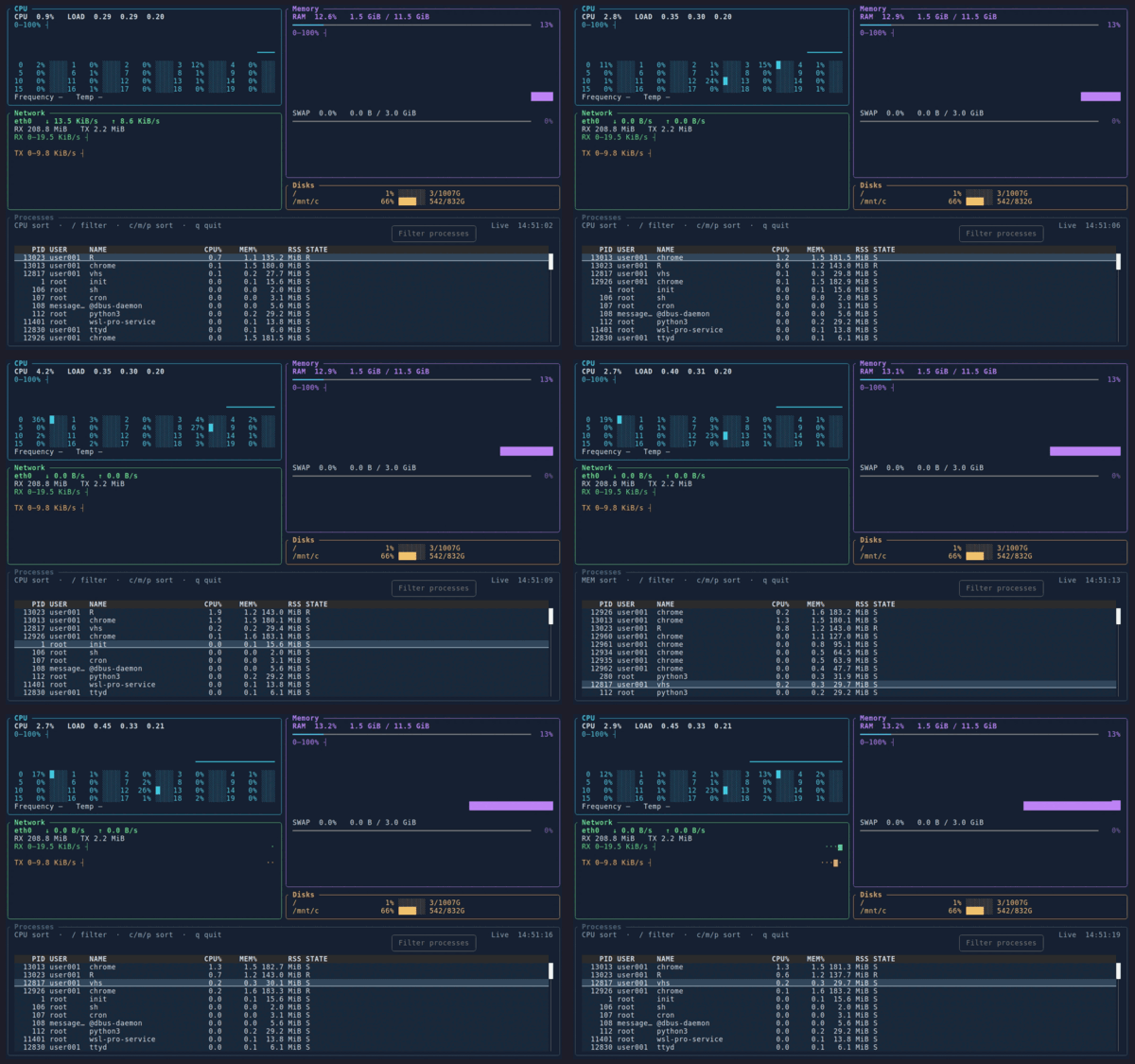
- termr — Terminal User Interface Framework for R — Build interactive terminal dashboards, forms, and sortable data tables in R, with keyboard navigation and automated headless UI testing.
Updated Packages
- {proxymix} 0.16.0: Kullback-Leibler Optimal Gaussian Mixture Proxies for Target Densities - diffify
- {UniversalCVI} 2.0.0: Hard and Soft Cluster Validity Indices - diffify
- {tseLCA} 2.1.0: Three-Step Estimation for Latent Class Analysis - diffify
- {Ruido} 1.2.1: Soundscape Spectral Metrics - diffify
- {future.mirai} 1.1.0: A ‘Future’ API for Parallel Processing using ‘mirai’ - diffify
- {atime} 2026.10.22: Asymptotic Timing - diffify
- {riskscores} 1.3.1: Optimized Integer Risk Score Models - diffify
- {nethist} 1.1.0: Network Histograms - diffify
- {sommer} 4.5.11: Solving Mixed Model Equations in R - diffify
- {margEVT} 0.5.0: Regularized Point Processes and Stochastic Marginalization for Extremes - diffify
- {EvoPhylo} 0.3.6: Pre- And Postprocessing of Morphological Data from Relaxed Clock Bayesian Phylogenetics - diffify
- {dbProject} 0.1.2: Database Connection Management and Utilities for ‘dbverse’ - diffify
- {dbMatrix} 0.2.0: Database-Backed Matrix Classes and Operations - diffify
- {hexify} 0.9.0: Equal-Area Hex Grids on the Snyder ISEA Icosahedron - diffify
- {HZIP} 0.1.5: Likelihood-Based Inference for Joint Modeling of Correlated Count and Binary Outcomes with Extra Variability and Zeros - diffify
- {GetTDData} 1.7.2: Get Data for Brazilian Bonds (Tesouro Direto) - diffify
- {sgmean} 0.1.2: Proportional Trimmed Mean - diffify
- {tvGarchKF} 1.0.1: Time-Varying Garch Models Through a State-Space Representation - diffify
- {maps} 3.4.4: Draw Geographical Maps - diffify
- {gaawr2} 0.0.9: Genetic Association Analysis - diffify
- {flow} 0.3.0: View and Browse Code Using Flow Diagrams - diffify
- {fcl} 0.1.6: A Financial Calculator - diffify
- {arakno} 1.4.0: ARAchnid KNowledge Online - diffify
- {sts} 1.6: Estimation of the Structural Topic and Sentiment-Discourse Model for Text Analysis - diffify
- {ggseqplot} 1.0.0: Render Sequence Plots using ‘ggplot2’ - diffify
- {duckdb} 2.0.0: DBI Package for the DuckDB Database Management System - diffify
- {zarr} 1.0.0: Native and Extensible R Driver for ‘Zarr’ - diffify
- {sweater} 0.1.9: Speedy Word Embedding Association Test and Extras Using R - diffify
- {lme4} 2.1-0: Linear Mixed-Effects Models using ‘Eigen’ and S4 - diffify
- {argoFloats} 1.0.10: Analysis of Oceanographic Argo Floats - diffify
- {stelfi} 1.0.3: Hawkes and Log-Gaussian Cox Point Processes Using Template Model Builder - diffify
- {rio} 1.3.1: A Swiss-Army Knife for Data I/O - diffify
- {gamma} 1.2.0: Dose Rate Estimation from in-Situ Gamma-Ray Spectrometry Measurements - diffify
- {camtrapdp} 0.6.1: Read and Manipulate Camera Trap Data Packages - diffify
- {PowRPriori} 0.2.1: Power Analysis via Data Simulation for (Generalized) Linear Mixed Effects Models - diffify
- {oolong} 0.7.1: Create Validation Tests for Automated Content Analysis - diffify
- {erplots} 0.2.1: Model-Agnostic Exposure-Response Plots - diffify
- {streamConnect} 0.1.0: Connecting Stream Mining Components Using Sockets and Web Services - diffify
- {rmoriedata} 0.4.1: Integrated Datasets for the ‘rmorie’ Package - diffify
- {projectLSA} 0.2.0: Shiny Application for Latent Structure Analysis with a Graphical User Interface - diffify
- {piecepackr} 1.17.1: Board Game Graphics - diffify
- {measureR} 0.0.7: Tools for Educational and Psychological Measurement - diffify
- {lddmm} 1.0.0: Longitudinal Drift-Diffusion Mixed Models (LDDMM) - diffify
- {highs} 1.15.1-1: ‘HiGHS’ Optimization Solver - diffify
- {ccva} 0.1.1: Climate Change Vulnerability Assessment with Constrained Latent Models - diffify
- {CAs} 0.24-4: Creating Covering Arrays - diffify
- {tsissm} 1.0.4: Linear Innovations State Space Unobserved Components Model - diffify
- {slca} 1.4.1: Structural Modeling for Multiple Latent Class Variables - diffify
- {mhn} 0.1.2: The Modified Half-Normal Distribution - diffify
- {openEBGM} 0.11.0: EBGM Disproportionality Scores for Adverse Event Data Mining - diffify
- {mixedbiastest} 1.1.0: Bias Diagnostic for Linear Mixed Models - diffify
- {GPvam} 3.4-0: Maximum Likelihood Estimation of Multiple Membership Mixed Models Used in Value-Added Modeling - diffify
- {asciiSetupReader} 3.0.0: Reads Fixed-Width ASCII Data Files (.txt or .dat) that Have Accompanying Setup Files (.sps or .sas) - diffify
- {aiDIF} 0.3.0: Differential Item Functioning for AI-Scored Assessments - diffify
- {salso} 0.3.80: Search Algorithms and Loss Functions for Bayesian Clustering - diffify
- {rTARDIS} 2.1.2: Terrains and Routes Directed in Spacetime - diffify
- {ggmlR} 0.8.8.1: ‘GGML’ Tensor Operations for Machine Learning - diffify
- {geoecu} 0.4.0: Maps of the Provinces, Cantons and Parishes of Ecuador (Mapas de Provincias, Cantones y Parroquias del Ecuador) - diffify
- {eurlex} 0.5.1: Retrieve Data on European Union Law - diffify
- {LOST} 2.1.5: Missing Morphometric Data Simulation and Estimation - diffify
- {pathling} 10.0.0: A Library for using ‘Pathling’ - diffify
- {GeometricMorphometricsMix} 0.6.1.3: Heterogeneous Methods for Shape and Other Multidimensional Data - diffify
- {phylospatial} 1.6.0: Spatial Phylogenetic Analysis - diffify
- {partykit} 1.3-1: A Toolkit for Recursive Partytioning - diffify
- {mc2d} 0.3.0: Tools for Two-Dimensional Monte-Carlo Simulations - diffify
- {rddtools} 2.0.3: Toolbox for Regression Discontinuity Design (‘RDD’) - diffify
- {gmapsdistance} 4.1.0: Distance and Travel Time Between Two Points from Google Maps - diffify
- {flexOR} 1.0.3: Flexible Odds Ratio Curves - diffify
- {datasetjson} 0.4.1: Read and Write CDISC Dataset JSON Files - diffify
- {phylotypr} 0.2.0: Classifying DNA Sequences to Taxonomic Groupings - diffify
- {musclesyneRgies} 1.4.0: Extract Muscle Synergies from Electromyography - diffify
- {glyrepr} 1.2.0: Representation for Glycan Compositions and Structures - diffify
- {equateMultiple} 1.2.0: Equating of Multiple Forms - diffify
- {eFRED} 0.2.0: Fetch Data from the Federal Reserve Economic Database - diffify
- {rbacon} 4.0.2: Age-Depth Modelling using Bayesian Statistics - diffify
- {IJSE} 0.3.4: Infinitesimal Jackknife Standard Errors for ‘brms’ Models - diffify
- {gsDesignNB} 0.4.0: Sample Size and Simulation for Negative Binomial Outcomes - diffify
- {GitAI} 0.1.4: Extracts Knowledge from ‘Git’ Repositories - diffify
- {GENEAcore} 1.3.9: Pre-Processing of ‘GENEActiv’ Data - diffify
- {farr} 1.1.1: Data and Code for Empirical Research in Accounting - diffify
- {duckplyr} 1.2.2: A ‘DuckDB’-Backed Version of ‘dplyr’ - diffify
- {dmrfit} 0.1.1: Scalable Bayesian Inference for Discrete Markov Random Fields - diffify
- {constructive} 1.4.0: Display Idiomatic Code to Construct Most R Objects - diffify
- {betaregscale} 3.1.1: Beta Regression for Interval-Censored Scale-Derived Outcomes - diffify
- {survlab} 0.2.0: Survival Model-Based Imputation for Laboratory Non-Detect Data - diffify
- {qdfauction} 0.2.0: Nonparametric Quantile Density Estimation and Structural Analysis of First-Price Auctions - diffify
- {landform} 0.3.0: Topographic Position Index-Based Landform Classification - diffify
- {gpbiometrics} 2.1.1: Process and Report Gazepoint Biometrics Data - diffify
- {BsplineQuantReg} 0.2.6: ‘Constrained Quantile Regression with B-Splines’ - diffify
- {reproducibleRchunks} 1.2.1: Automated Reproducibility Checks for R Markdown Documents - diffify
- {gp3sequences} 0.3.2: Transparent Analysis of Ordered Categorical Sequences - diffify
- {gp3ml} 0.3.2: Governance-First Predictive Modelling for ‘Gazepoint’ Research - diffify
- {MIC} 2.0.2: Analysis of Antimicrobial Minimum Inhibitory Concentration Data - diffify
- {ivo.table} 0.8.0: Nicely Formatted Contingency Tables and Frequency Tables - diffify
- {eq5dsuite} 2.1.0: Handling and Analysing ‘EQ-5D’ Data - diffify
- {doconv} 0.4.2: Document Conversion to ‘PDF’, Thumbnails and Visual Testing - diffify
- {visATC} 1.1.0: Visualise the Anatomical Therapeutic Chemical (ATC) Hierarchy - diffify
- {svyROC} 1.2.0: Estimation of the ROC Curve and the AUC for Complex Survey Data - diffify
- {opentimsr} 1.2.0: An Open-Source Loader for Bruker’s timsTOF Data Files - diffify
- {biomod2} 4.3-4-8: Ensemble Platform for Species Distribution Modeling - diffify
- {rzig} 1.0.0: Safe Zig Bindings - diffify
- {echos} 1.0.5: Echo State Networks for Time Series Modeling and Forecasting - diffify
- {barry} 0.3.0: Your Go-to Motif Accountant - diffify
- {netdiffuseR} 1.25.1: Analysis of Diffusion and Contagion Processes on Networks - diffify
- {glymotif} 1.0.1: Extract Glycan Motifs from Glycan Structures - diffify
- {rdracor} 1.1.0: Access to the ‘DraCor’ API - diffify
- {qslice} 0.4.0: Implementations of Various Slice Samplers - diffify
- {gdxtools} 1.2.0: Manipulate ‘GDX’ Files - diffify
- {eClosure} 0.9.7: Methods Based on the e-Closure Principle - diffify
- {FuzzyClass} 0.3.0: Fuzzy and Non-Fuzzy Classifiers - diffify
- {nltm} 1.4.7: Non-Linear Transformation Models - diffify
- {Deriv} 4.3.6: Symbolic Differentiation - diffify
- {TmCalculator} 1.1.3: Genome-Wide Nucleic Acid Melting Temperature Profiling and Multi-Omics Integration - diffify
- {RprobitB} 2.0.1: Bayesian Probit Choice Modeling - diffify
- {QWDAP} 1.1.22: Quantum Walk-Based Data Analysis and Prediction - diffify
- {NSR} 0.1.1: ‘Native Status Resolver’ - diffify
- {rolescry} 0.3.0: Name-Blind Variable-Role Detection by Data Signature - diffify
- {ncmR} 0.4.0: Fit Neutral Community Model to Microbiome or Ecological Data - diffify
- {locatexec} 0.2.1: Detection and Localization of Executable Files - diffify
- {fabricatr} 2.0.0: Tidyverse-First Data Fabrication - diffify
- {avlm} 0.2.0: Safe Anytime Valid Inference for Linear Models - diffify
- {wdsmatch} 0.2.2: Weighted Double Score Matching for Survey-Weighted Causal Inference - diffify
- {teems} 1.0.1: Trade and Environment Equilibrium Modeling System - diffify
- {stIHC} 0.1.1: Spatial Transcriptomics Iterative Hierarchical Clustering - diffify
- {statsExpressions} 2.2.1: Tidy Dataframes and Expressions with Statistical Details - diffify
- {multicool} 1.0.2: Permutations of Multisets in Cool-Lex Order - diffify
- {MosaiClusteR} 0.1.4: An Umbrella Framework for Multi-Source and Multi-Omics Clustering - diffify
- {icarus} 0.3.4: Calibrates and Reweights Units in Samples - diffify
- {corto} 1.4.0: Inference of Gene Regulatory Networks - diffify
- {brms.mmrm} 1.1.2: Bayesian MMRMs using ‘brms’ - diffify
- {OneSampleMR} 0.1.9: One Sample Mendelian Randomization and Instrumental Variable Analyses - diffify
- {eHDPrep} 2.0.1: Quality Control and Semantic Enrichment of Datasets - diffify
- {tscv} 1.0.2: Functions and Utilities for Tidy Time Series Forecasting and Time Series Cross-Validation - diffify
- {serrsBayes} 0.6-1: Bayesian Modelling of Raman Spectroscopy - diffify
- {docorator} 0.8.0: Docorate (Decorate + Output) Displays - diffify
- {TUvalues} 1.2: Tools for Calculating Allocations in Game Theory using Exact and Approximated Methods - diffify
- {EventStudy} 0.66.0: Event Study Analysis - diffify
- {vaccineff} 1.0.4: Estimate Vaccine Effectiveness Based on Different Study Designs - diffify
- {multilevLCA} 2.1.7: Estimates and Plots Single-Level and Multilevel Latent Class Models - diffify
- {actibase} 0.8.0: Baseline Functions for Actigraphy and Activity Processing and Analysis - diffify
- {ftsa} 6.8: Functional Time Series Analysis - diffify
- {transDIF} 0.2.0: Score Comparability for Translated and Adapted Exams - diffify
- {sigminer} 2.4.0: Extract, Analyze and Visualize Mutational Signatures for Genomic Variations - diffify
- {quallmer} 0.6.0: Qualitative Analysis with Large Language Models - diffify
- {decisionfacets} 0.2.0: Decision Accuracy and Consistency for Rater-Mediated Exams - diffify
- {AMDconfigurations} 0.4.0: Geometric Analysis of Configurations in High-Dimensional Spaces - diffify
- {coldstart} 0.2.0: Calibrating Generated Items Before Pretesting with Predicted Priors - diffify
- {RDS} 0.9-11: Respondent-Driven Sampling - diffify
- {sumer} 1.7.0: Sumerian Cuneiform Text Analysis - diffify
- {MVar.pt} 2.3.2: Analise multivariada (brazilian portuguese) - diffify
- {MVar} 2.3.2: Multivariate Analysis - diffify
- {Kira} 1.1.0: Machine Learning - diffify
- {bayprior} 0.5.0: Bayesian Prior Elicitation, Diagnostics, and Regulatory Reporting - diffify
- {icesConnect} 1.2.0: Provides User Tokens for Access to ICES Web Services - diffify
- {txshift} 0.4.0: Efficient Estimation of the Causal Effects of Stochastic Interventions - diffify
- {rcrisp} 1.0.0: Automate the Delineation of Urban River Spaces - diffify
- {pecanr} 0.4.0: Partial Eta-Squared for Crossed, Nested, and Mixed Linear Mixed Models - diffify
Videos and Podcasts
Shiny Apps
R Internationally
R Project Updates
Updates from R Core:
Upcoming Events in 3 Months
Events in 3 Months:
Connect
Join the Data Science Learning Community
rtistry
🎨 #Rtistry #RStats #CreativeCoding #ggplot2
— Nicola Rennie (@nrennie.bsky.social) October 23, 2026 at 11:34 PM
[image or embed]
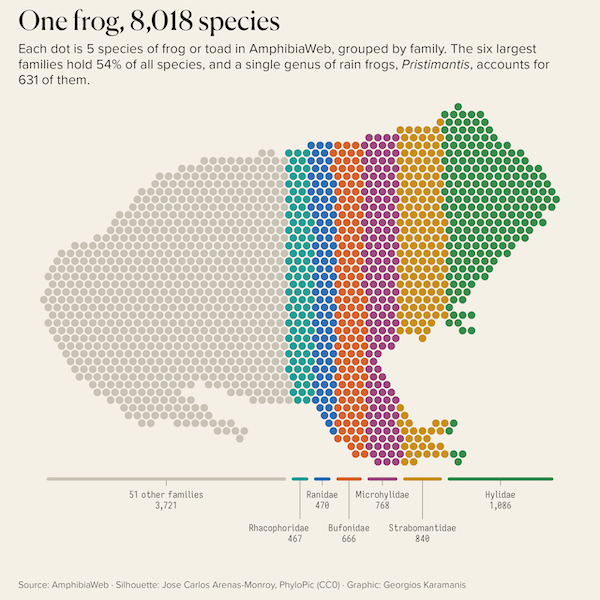
This week's #TidyTuesday is about college majors and generative AI. In 7 of the 8 largest fields, majors overlap more with language models than image generation. Engineering is the exception. Code: https://github.com/gkaramanis/tidytuesday/tree/master/2026/2026-week_43 #RStats #dataviz
— Georgios Karamanis (@karaman.is) October 25, 2026 at 4:44 PM
[image or embed]
Quotes of the Week
Understanding Maximum Likelihood Estimation, now in 3D!: rpsychologist.com/likelihood #dataviz #stats #rstats
— Kristoffer Magnusson (@rpsychologist.com) October 25, 2026 at 2:44 PM
[image or embed]